6935 Todds Lane San Antonio, TX 98336
Our Working Time: 09:00 am To 06:00 pm

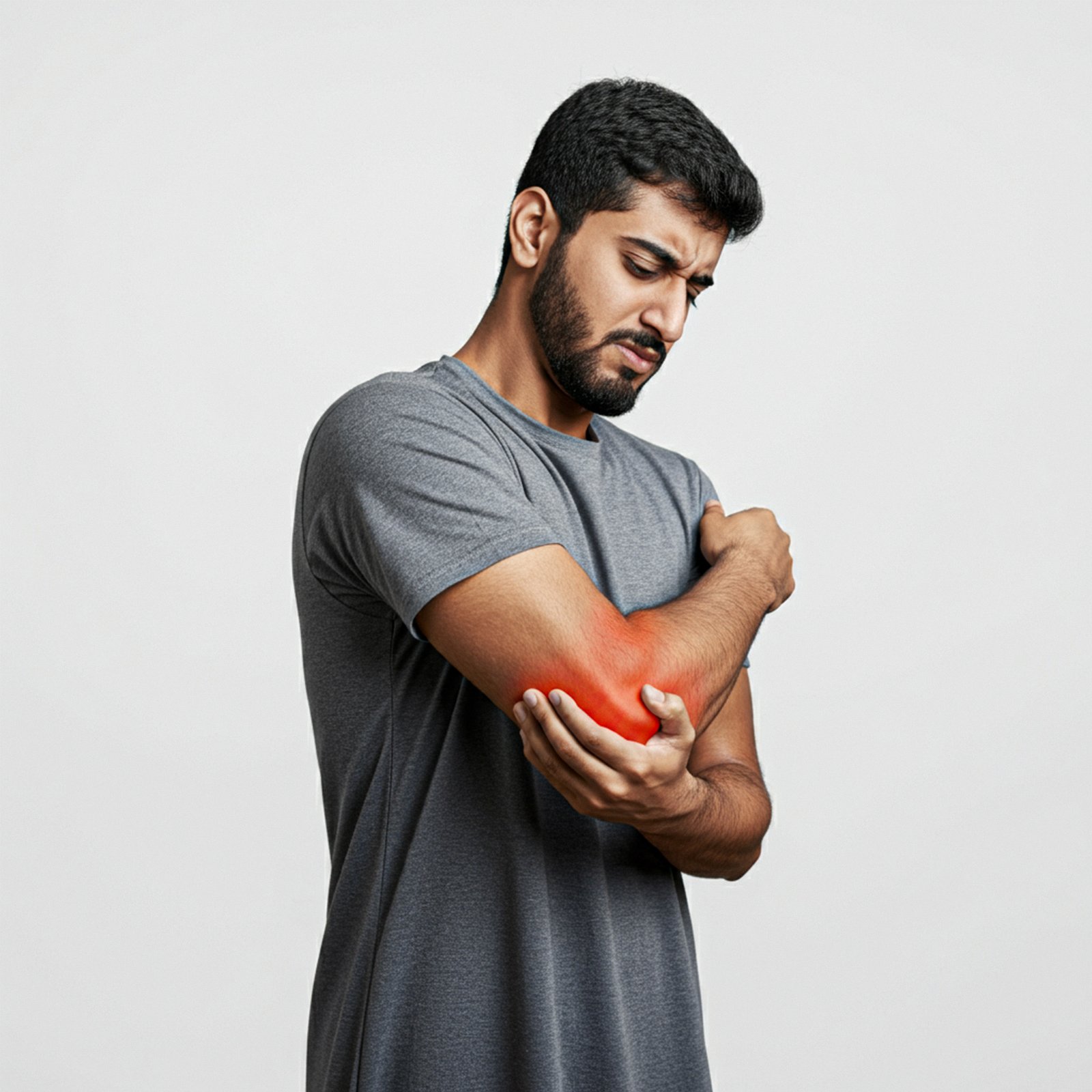
A sudden sharp pain at the back of the elbow following a fall on an outstretched arm, a failed pushing movement, or a direct blow to the elbow combined with inability to fully extend the forearm, is the presentation of a triceps rupture. It is the least common tendon rupture in the upper limb but requires prompt recognition and surgical management in active patients.
What is Triceps Rupture?
The triceps brachii is the muscle at the back of the upper arm responsible for extending the elbow. Its tendon inserts on the olecranon, the bony tip of the elbow. Complete avulsion of the triceps tendon from the olecranon is the most clinically significant injury and requires surgical reattachment to restore elbow extension strength. Partial tears may be managed non-surgically.
Types of Triceps Rupture
Type I
Complete Tendon Avulsion: The triceps tendon tears entirely from its insertion on the olecranon tip. This is the most clinically significant pattern and produces a complete inability to actively extend the elbow against gravity. Surgical repair is required in active patients.
Type II
Partial Thickness Tear: Only a portion of the tendon fibres tear, leaving the remaining tendon partially attached to the olecranon. The patient may retain some elbow extension strength, making the diagnosis more difficult. MRI is essential to characterise the extent of partial tears and guide treatment decisions.
Type III
Musculotendinous Junction Tear: The tear occurs at the junction between the triceps muscle belly and the tendon, rather than at the bony insertion. This is a less common pattern and may be associated with anabolic steroid use or metabolic conditions that predispose tendons to failure at this site.
Causes
A fall on an outstretched arm where the triceps is contracting to decelerate the fall is the most common mechanism. Direct trauma to the posterior elbow, a failed push-up or bench press, and anabolic steroid use (which weakens tendons) have also been implicated.
- Sudden pain at the back of the elbow with a tearing or popping sensation
- Weakness or inability to actively extend the elbow against gravity
- A palpable gap at the olecranon where the tendon has avulsed
- Bruising and swelling at the posterior elbow

Diagnosis
Clinical examination is often sufficient to confirm a complete triceps avulsion. A palpable gap at the posterior elbow, just proximal to the olecranon tip, is characteristic. The Thompson extension test, where the patient is asked to actively extend the elbow against gravity in a seated position, demonstrates significant weakness or complete inability to extend in complete ruptures.
Plain X-rays may reveal a small bony avulsion fragment at the olecranon tip. MRI is the definitive investigation, confirming the diagnosis, characterising the degree of retraction, and guiding surgical planning. It also identifies partial tears that may not be clinically obvious.
Treatment
Surgical Repair
Complete triceps avulsions in active patients require surgical repair. Dr. Kushalappa reattaches the avulsed tendon to the olecranon through an open posterior elbow approach using suture anchors or bone tunnels. Early repair, within 2 to 3 weeks of injury, provides the best outcomes. Recovery involves elbow splinting for 2 to 3 weeks, followed by progressive physiotherapy, with return to full activity at 4 to 6 months.
Why Choose Dr. Kushalappa Subbiah in Bangalore?
Dr. Kushalappa Subbiah completed a Fellowship in Shoulder Surgery at the Sydney Shoulder Research Institute, where he trained in advanced arthroscopic shoulder procedures including labral repair and reconstruction. He holds the International Olympic Committee (IOC) Diploma in Sports Medicine, and has direct clinical experience managing shoulder injuries in Indian athletes across cricket, swimming, tennis, and contact sports. He is appointed as a Consultant Shoulder Surgeon at NH Hospital, Bangalore.
Frequently Asked Questions
Both can cause posterior elbow swelling and pain. Olecranon bursitis is inflammation of the fluid sac over the olecranon tip and does not cause weakness of elbow extension. A triceps rupture causes a specific loss of active elbow extension and a palpable tendon gap, which distinguishes it clinically.