6935 Todds Lane San Antonio, TX 98336
Our Working Time: 09:00 am To 06:00 pm

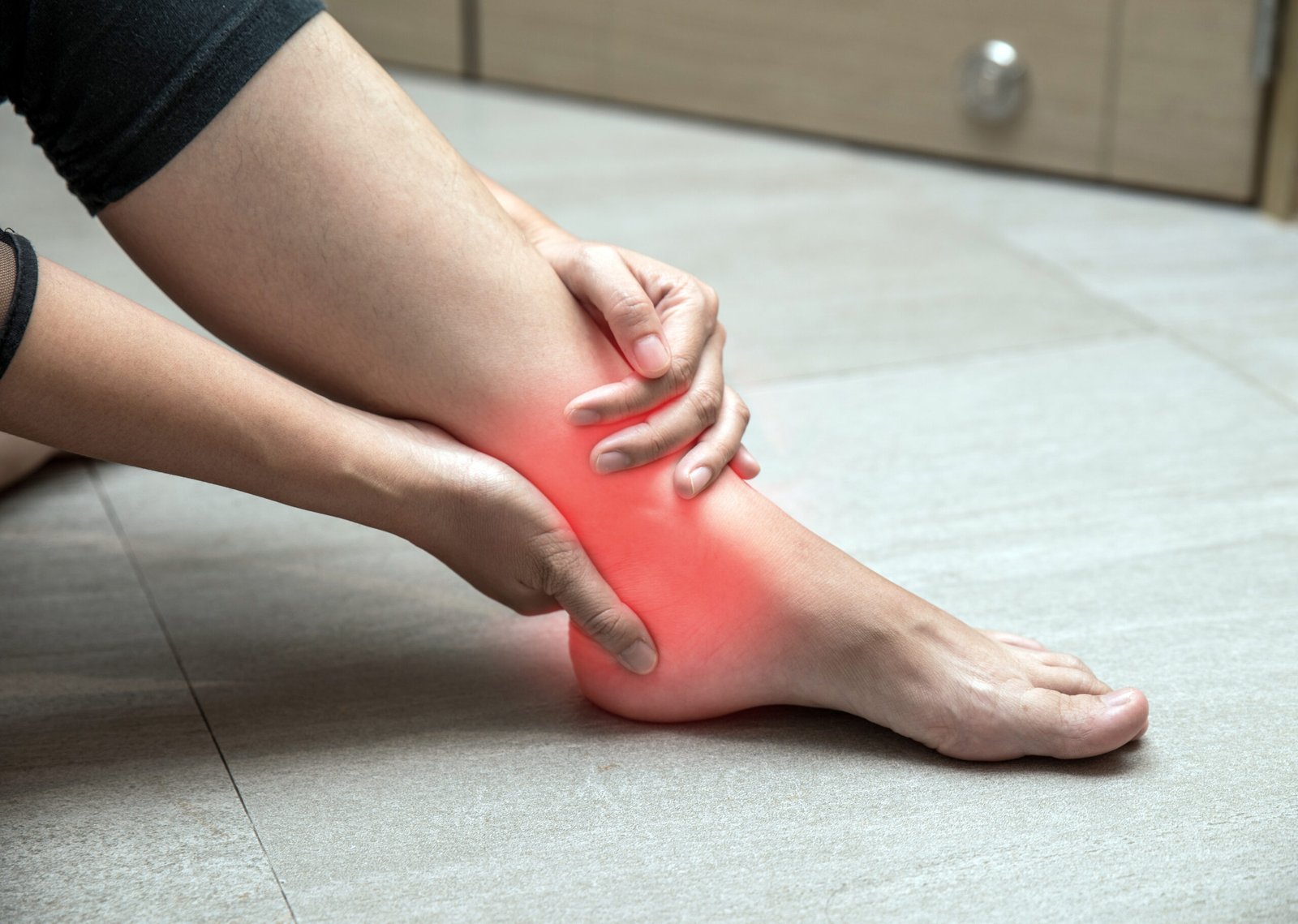
An ankle that rolls repeatedly, giving way on uneven ground or during sport, combined with a persistent sense of looseness and recurrent swelling, is the characteristic pattern of chronic ankle instability. It is a condition that significantly affects athletes across football, basketball, cricket, and running sports, and one that responds well to surgical reconstruction when conservative measures have failed.
What is Ankle Instability?
Ankle instability most commonly develops following incompletely healed lateral ankle sprains. The anterior talofibular ligament (ATFL) and calcaneofibular ligament (CFL) are the primary stabilisers of the lateral ankle and are the structures most commonly torn in a lateral ankle sprain. When these ligaments heal with laxity rather than restoring normal tension, the ankle develops chronic mechanical instability that predisposes to repeated sprains.
Chronic ankle instability is defined as persistent functional or mechanical instability of the ankle lasting more than 12 months after the initial sprain.
Types of Ankle Instability
Type I
Mechanical Instability: Objective laxity of the ankle ligaments, demonstrable on clinical examination with the anterior drawer and talar tilt tests, and quantifiable on stress X-rays. The ligaments have healed with excessive length or have failed to heal adequately, producing measurable abnormal motion.
Type II
Functional Instability: A subjective sensation of the ankle giving way or feeling unreliable during activity, in the absence of measurable mechanical laxity on examination. The instability is related to impaired proprioception and neuromuscular control rather than structural ligament laxity. Responds well to physiotherapy-based proprioceptive training.
Type III
Combined Mechanical and Functional Instability: The most common pattern in chronic ankle instability. Both structural ligament laxity and proprioceptive deficit are present. Surgical ligament reconstruction combined with post-operative rehabilitation is typically required.
Causes
An inadequately treated acute ankle sprain is the primary cause. Players who return to sport too early, without completing ligament rehabilitation, are at particular risk. Athletes in sports involving repeated jumping, cutting, and landing, including basketball, football, and kabaddi, are the most commonly affected.
- Repeated ankle sprains with progressively less force required for each subsequent episode
- A persistent feeling that the ankle is unreliable or likely to give way
- Swelling around the outer ankle after activity
- Pain and discomfort with cutting, pivoting, or landing activities
- Difficulty on uneven ground

Diagnosis
Clinical examination assessing the anterior drawer and talar tilt tests identifies lateral ligament laxity. Stress X-rays under fluoroscopy quantify the degree of instability. MRI assesses the ligaments and any associated cartilage damage in the ankle joint.
Treatment
Ankle Ligament Reconstruction
For chronic ankle instability that has failed physiotherapy and bracing, Dr. Kushalappa performs ankle ligament reconstruction. Using the Brostrom-Gould technique, the attenuated or torn ATFL and CFL are tightened and reinforced with the adjacent tissue, restoring lateral ankle stability without the need for a tendon graft in most primary cases. For more severe instability or revision cases, a tendon graft augmentation is used. Recovery involves a period of immobilisation for 2 to 3 weeks, followed by graduated physiotherapy and return to sport at 3 to 4 months.
Why Choose Dr. Kushalappa Subbiah in Bangalore?
Dr. Kushalappa Subbiah completed a Fellowship in Shoulder Surgery at the Sydney Shoulder Research Institute, where he trained in advanced arthroscopic shoulder procedures including labral repair and reconstruction. He holds the International Olympic Committee (IOC) Diploma in Sports Medicine, and has direct clinical experience managing shoulder injuries in Indian athletes across cricket, swimming, tennis, and contact sports. He is appointed as a Consultant Shoulder Surgeon at NH Hospital, Bangalore.
Frequently Asked Questions
Yes, in many patients. A dedicated programme of proprioceptive rehabilitation, peroneal muscle strengthening, and appropriate bracing resolves instability in a significant proportion of cases. Surgery is recommended when conservative treatment over 3 to 6 months has failed and instability is affecting sport or daily function.
Most patients are immobilised for 2 to 3 weeks and then progress through physiotherapy over 8 to 12 weeks. Return to full competitive sport is typically at 3 to 4 months.
Yes, it is one of the most common orthopaedic complaints in athletes who participate in sports requiring frequent cutting, jumping, and landing. Basketball ankle sprain and football ankle injuries are particularly prevalent presentations.