6935 Todds Lane San Antonio, TX 98336
Our Working Time: 09:00 am To 06:00 pm

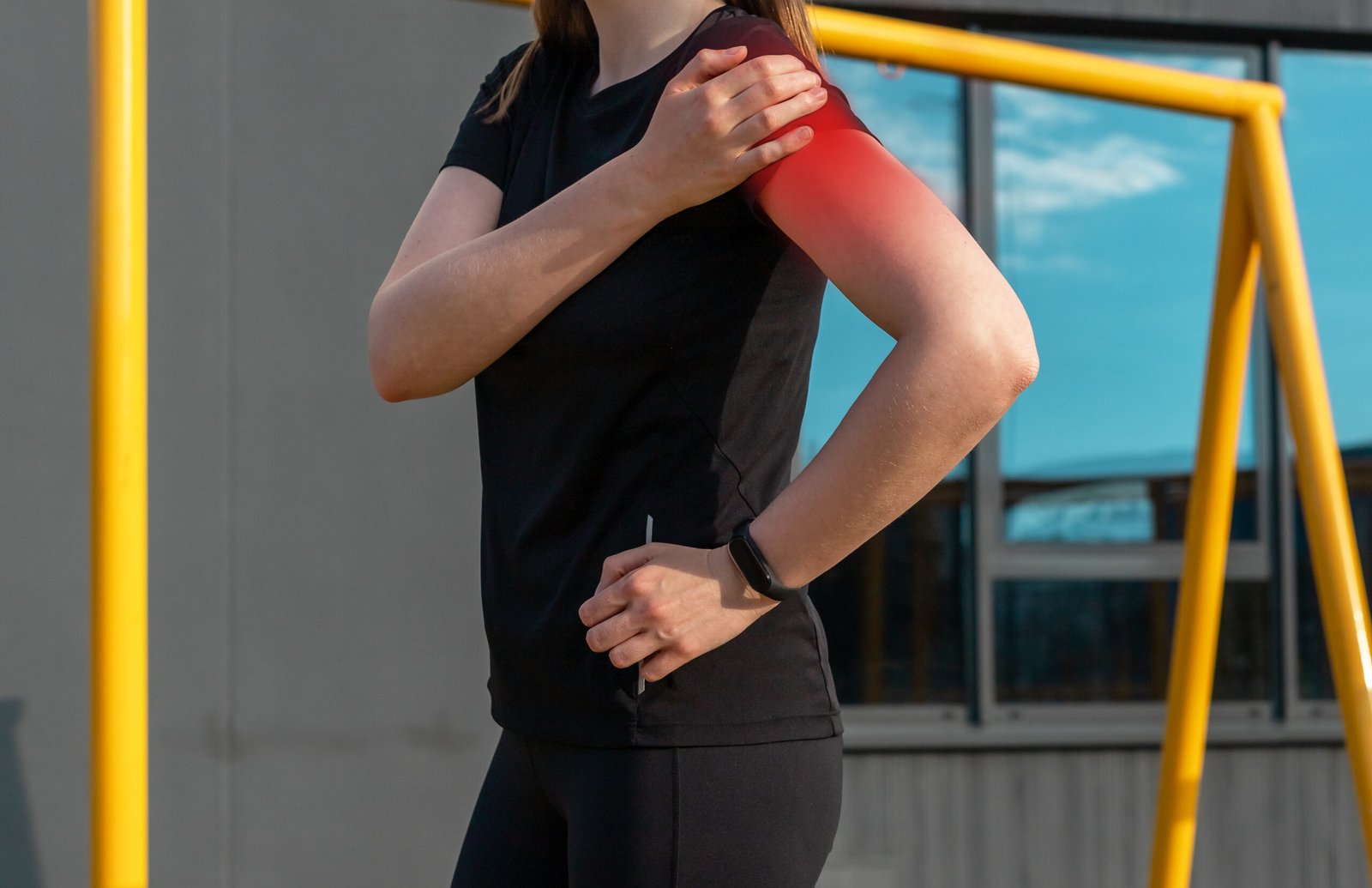
Persistent shoulder pain that has been gradually worsening over months or years, accompanied by increasing stiffness, a grinding or grating sensation with movement, and reduced ability to lift or rotate the arm, are the typical signs of shoulder arthritis. While it is a progressive condition, the right treatment can significantly restore function and dramatically reduce pain.
What is Shoulder Arthritis?
Shoulder arthritis refers to the breakdown of cartilage within the shoulder joint, leading to progressive pain, stiffness, and loss of function. The glenohumeral joint, where the head of the humerus meets the glenoid socket of the scapula, is the primary joint affected. The acromioclavicular (AC) joint can also be affected separately or in combination.
As cartilage wears away, the underlying bone is exposed, bone-on-bone contact develops, and bone spurs form around the joint margins. This produces characteristic grinding and increased pain with movement.
Types of Shoulder Arthritis
Type I
Osteoarthritis: The most common type, caused by progressive cartilage degeneration over time. Typically affects patients over 50.
Type II
Rheumatoid Arthritis: An autoimmune condition where the joint lining is attacked, causing inflammation, cartilage loss, and deformity. Can affect multiple joints and all age groups.
Type III
Post-traumatic Arthritis: Develops after a significant shoulder injury such as a fracture or dislocation, which damages the cartilage surface and accelerates joint degeneration.
Type IV
Rotator Cuff Tear Arthropathy: Develops when a massive rotator cuff tear, left untreated, alters shoulder mechanics and leads to secondary arthritis of the glenohumeral joint.
Causes
Age-related cartilage wear is the most common cause. Previous shoulder injuries including fractures, dislocations, and chronic instability increase the risk of post-traumatic arthritis. Inflammatory conditions such as rheumatoid arthritis directly attack joint cartilage. Massive rotator cuff tears, when neglected over years, destabilise the humeral head and lead to secondary arthritis.
- Deep, aching shoulder pain that worsens with activity and may be present at rest and at night
- Progressive stiffness with loss of both active and passive shoulder movement
- A grinding, creaking, or grating sensation within the joint during movement
- Swelling and warmth around the shoulder joint in inflammatory types
- Weakness and difficulty performing overhead tasks, dressing, or reaching behind the back
- Pain that progressively affects daily activities and sleep quality

Diagnosis
Clinical examination assesses range of motion, joint tenderness, and the presence of crepitus. X-rays are the primary diagnostic tool and demonstrate joint space narrowing, bone spur formation, and changes in bone shape that are characteristic of advanced arthritis. MRI provides additional detail on cartilage quality, soft tissue integrity, and the condition of the rotator cuff.
Treatment
Total Shoulder Replacement (Anatomic)
For patients with glenohumeral arthritis and an intact or repairable rotator cuff, Dr. Kushalappa performs a total anatomic shoulder replacement. The damaged humeral head is replaced with a metal ball and the glenoid socket is resurfaced with a polyethylene component. The procedure restores the natural ball-and-socket anatomy of the shoulder, dramatically relieving pain and restoring movement. Recovery involves a sling for 4 to 6 weeks and a structured physiotherapy programme over 3 to 4 months, with most patients achieving significant functional improvement within 6 months.
Reverse Shoulder Replacement
For patients with rotator cuff tear arthropathy, where both severe arthritis and an irreparable rotator cuff are present, Dr. Kushalappa performs a reverse shoulder replacement. In this procedure, the positions of the ball and socket are reversed, placing a metal ball on the glenoid and a socket on the humeral side. This design allows the deltoid muscle to power shoulder movement, bypassing the non-functional rotator cuff. It is highly effective at restoring pain-free shoulder function in this complex group of patients.
Why Choose Dr. Kushalappa Subbiah in Bangalore?
Dr. Kushalappa Subbiah completed a Fellowship in Shoulder Surgery at the Sydney Shoulder Research Institute, where he trained in advanced arthroscopic shoulder procedures including labral repair and reconstruction. He holds the International Olympic Committee (IOC) Diploma in Sports Medicine, and has direct clinical experience managing shoulder injuries in Indian athletes across cricket, swimming, tennis, and contact sports. He is appointed as a Consultant Shoulder Surgeon at NH Hospital, Bangalore.
Frequently Asked Questions
Modern shoulder replacements are highly durable, with the majority lasting 15 to 20 years or longer. Younger patients may require a revision procedure at some point in the future, which is taken into account during preoperative planning.
A total (anatomic) replacement replicates the natural ball-and-socket anatomy and requires an intact rotator cuff to function. A reverse replacement switches the ball and socket positions, allowing the deltoid to move the shoulder without needing the rotator cuff, making it the preferred choice when the rotator cuff is irreparably torn.
No. Shoulder replacement is an open surgical procedure requiring a formal incision at the front of the shoulder. However, Dr. Kushalappa uses modern minimally disruptive surgical techniques to reduce soft tissue trauma and speed recovery.
Most patients are in a sling for 4 to 6 weeks, with physiotherapy beginning at 2 weeks. Significant improvement in pain is typically noticed within 6 to 8 weeks. Full functional recovery, including return to light activities, is expected within 3 to 4 months.