6935 Todds Lane San Antonio, TX 98336
Our Working Time: 09:00 am To 06:00 pm

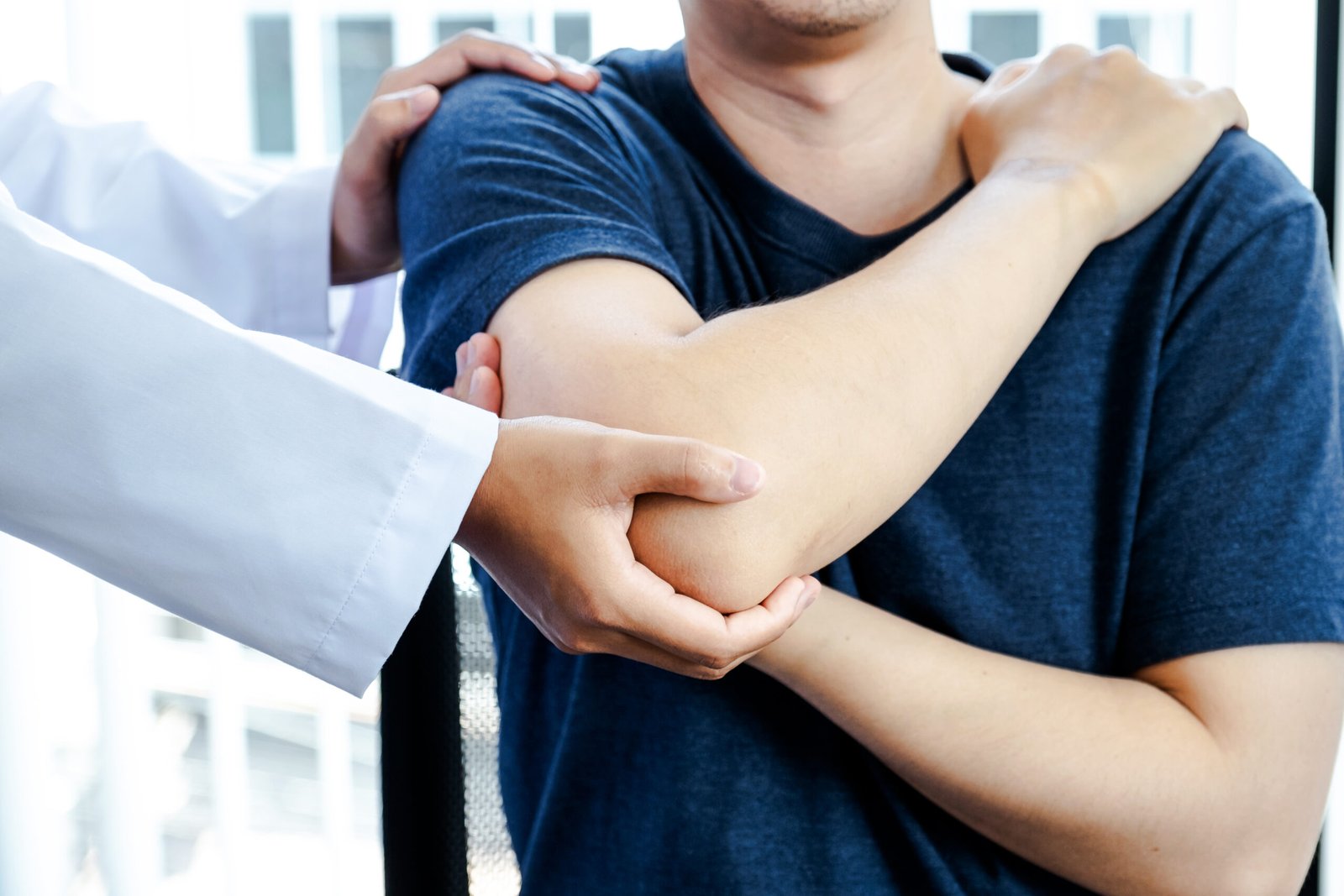
Lateral elbow pain in a young overhead athlete, particularly a cricket bowler, gymnast, or thrower, that does not resolve with rest and is accompanied by occasional locking or loose body symptoms, may indicate osteochondritis dissecans of the capitellum. It is a condition that requires early specialist assessment to prevent long-term joint damage.
What is Capitellar OCD?
Osteochondritis dissecans (OCD) of the capitellum is a condition in which a segment of bone and its overlying cartilage in the capitellum, the rounded portion of the lateral distal humerus, loses its blood supply and begins to separate from the surrounding bone. Fragments can become partially or fully detached, creating loose bodies within the elbow joint. It predominantly affects young male athletes between the ages of 11 and 20 who engage in repetitive overhead or loading activities.
Types of Capitellar OCD
Type I
Stable Lesion (ICRS Grade I to II): The osteochondral fragment is intact and attached to the underlying bone, though signal changes indicate early avascular change or partial detachment. The cartilage surface is intact or minimally irregular. Activity restriction and conservative management may be appropriate.
Type II
Unstable Lesion (ICRS Grade III): The fragment shows fluid signal behind it on MRI, indicating it is partially detached and at risk of complete separation. Surgical treatment is generally recommended to prevent complete displacement.
Type III
Displaced Fragment (ICRS Grade IV): The osteochondral fragment has completely separated and is free within the elbow joint as a loose body. Causes mechanical symptoms including locking and catching. Surgical removal and treatment of the defect is required.
Causes
Repetitive compression forces on the lateral elbow during throwing, gymnastics, and overhead sport are the primary cause. The combination of compressive load and limited blood supply to the capitellum in adolescence makes this area vulnerable to ischaemic damage.
- Lateral elbow pain worsening with activity, particularly throwing or overhead movement
- Swelling and stiffness in the elbow
- Locking or catching if a loose body is present within the joint
- Restricted elbow range of motion, particularly a flexion contracture

Diagnosis
Plain X-rays may demonstrate a lucency or defect in the capitellum. MRI provides detail on the extent of the OCD lesion, the stability of the fragment, and any associated cartilage changes. Arthroscopic assessment provides the most accurate grading.
Treatment
Elbow Arthroscopy
For unstable OCD lesions, displaced fragments, or cases that have failed conservative management, Dr. Kushalappa performs elbow arthroscopy to assess the lesion directly, remove loose bodies, and either fix stable fragments with anchors or debride and microfracture the underlying bone to stimulate healing cartilage. Early surgical intervention in young athletes prevents progressive joint damage.
Why Choose Dr. Kushalappa Subbiah in Bangalore?
Dr. Kushalappa Subbiah completed a Fellowship in Shoulder Surgery at the Sydney Shoulder Research Institute, where he trained in advanced arthroscopic shoulder procedures including labral repair and reconstruction. He holds the International Olympic Committee (IOC) Diploma in Sports Medicine, and has direct clinical experience managing shoulder injuries in Indian athletes across cricket, swimming, tennis, and contact sports. He is appointed as a Consultant Shoulder Surgeon at NH Hospital, Bangalore.
Frequently Asked Questions
Stable, non-displaced lesions in younger patients with open growth plates can be managed with activity restriction and rest. However, unstable lesions, loose bodies, or failure to respond to conservative treatment are indications for surgical intervention.
Yes, in most cases following appropriate treatment. Early diagnosis and intervention significantly improve the likelihood of a full return to sport.